In a World of AI Slop, Human Connection Wins
Straight to the Point
- Bookstores are booming, targeting is table stakes, and AI slop is drowning everyone out.
- The ultimate one-to-one is still human-to-human, and the data proves it.
- We’re doing more in-person work than ever, because it’s harder, and that’s the point.
What We See
I noticed an article last December in the Wall Street Journal that stuck with me, and as 2026 has gone on, I keep coming back to it. It was about Barnes & Noble opening 60 new stores in the last year alone.
What a statement that makes. Bookstores were the first casualty of digital disruption, Amazon started right there in the 90s, and now, as things get more digital and more AI-driven by the day, here’s a chain opening new stores all over the country.
It got me thinking about our own space at Purple. For those of you in the business, we hear a lot about 1:1 digital targeting. The ability to target individual people, one-to-one: left-handed voters, Hill staffers who shape health policy, whoever. We’ve got it built.
There’s nothing wrong with it. Almost every firm, including this one, and countless other companies offer it. And we happen to think ours is the best too. But it’s what you do now. Best practice.
But as AI becomes more ubiquitous, more content gets created. Some of it’s great. A lot of it isn’t. The barrier to writing a LinkedIn post is basically zero now, same for a video or a graphic. The “slop,” as they call it, is everywhere, and that’s just as true in advocacy and corporate reputation campaigns as anywhere else. Not that I don’t believe in AI, or the transformative effect it’s having on this industry. I’m a big believer and an adopter. AI is creating amazing things. But it’s also creating slop that makes it harder than ever to break through.
What It Means
For all that smart one-to-one targeting in the digital space, the ultimate one-to-one is still human-to-human.
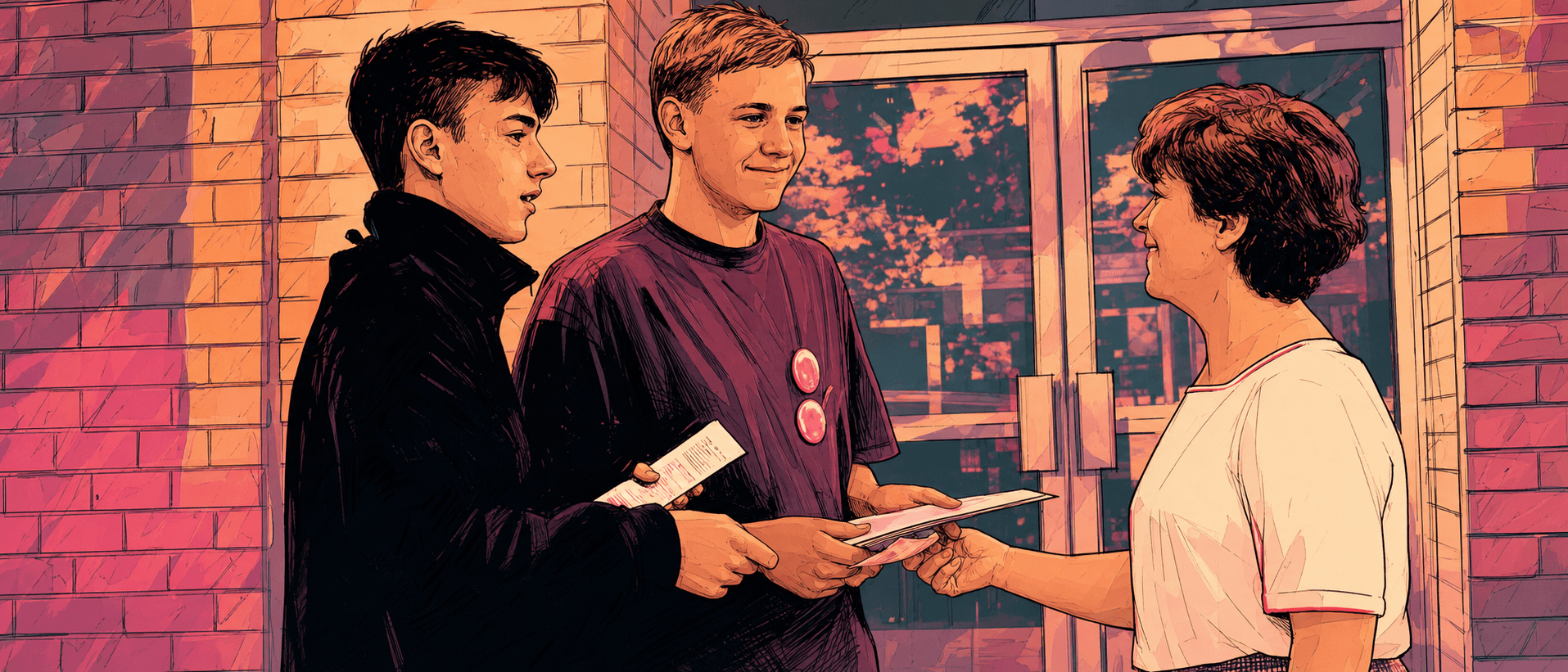
The first political campaign I ever worked on, I was 15. My best friend’s dad was running for reelection to the school board. We had no other way to reach voters, so we knocked on doors every day after school. Talking to people, sharing our own personal story. And you know what? We lost. (Bad example.)
But fast forward to me as a field director on a Virginia House race in 2001, where our candidate knocked on 15,000 doors against a longtime, popular Republican incumbent. It was the only Democratic pickup in the Virginia House that cycle, a tough year for Democrats, two months after 9/11.
We know from politics that face-to-face canvassing increases voter turnout by 7 to 10 percentage points, compared to 0.5 to 1 point for direct mail and 1 to 2 points for phone calls, according to decades of research pioneered by Yale political scientists Alan Gerber and Donald Green.
Human-to-human connection breaks through. It’s credible, it’s surprising, and most of all, it’s meaningful. Whether it’s a political campaign, an advocacy campaign, or a corporate reputation campaign, the goal is the same: find a way to get people to look up from their screen and take notice of what you’re doing. Even better if you can get them into an actual conversation.
What to Do
We’ve been creating a lot of these experiences for clients. I think we’ve done more in-person, experiential work in the past two years than we did in the previous ten. Everything from custom experiences at sporting events, to canvassers deployed in creative ways on the Hill and in districts, to giving people the chance to paint a mural, to launching a fictional political campaign with a character candidate to drive a message home. Anything to get people to look up and take notice. Half the job is figuring out who to reach. The other half, still the harder half, is what you do once you’ve found them.
And that’s not easy to do. That’s the point. It’s a lot more work to create an experience like that than to run a digital banner ad (boring).
My first paid political jobs were in field organizing, so I always resented the press, media, and social/digital people (not the fundraising people, that’s brutal). They got to sit back in the air-conditioned office while we actually talked to voters.
Back in that 2001 state house race, one day we got a bunch of canvassers together with a loudspeaker and set up in front of our opponent’s office, which was in a high-traffic area, and played “Hit the Road Jack” all afternoon (his name was Jack). It got noticed, and it spurred a lot of conversation.
One of Purple’s founders, Alex Castellanos (who I rarely agree with), once said the campaigns that win are the ones having the most fun. And this is fun.
That’s a new KPI people should take note of: how much fun are we having on this campaign. Just don’t use that one with procurement.
Explore how Purple builds campaigns that move stakeholders beyond awareness and into participation.